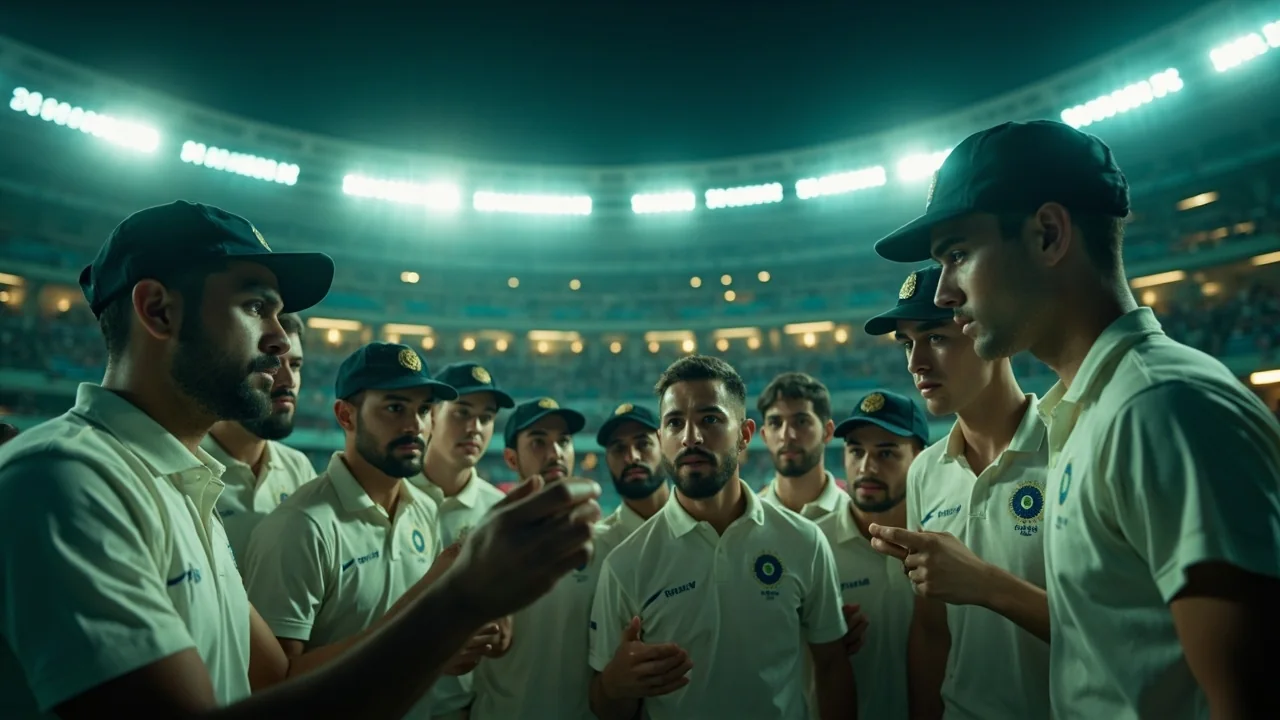
Wide evening view of an Indian cricket stadium under floodlights before a Mumbai Indians fixture
Retrospective · Teams editorial desk · 21 October 2025

What most coverage misses about Mumbai Indians' IPL 2025 release candidates and the IPL 2026 auction math

A retrospective of Mumbai Indians' IPL 2025 finish and the five-name release list ahead of the IPL 2026 auction — read through contract value, role scarcity, and the purse arithmetic that any off-season answer has to clear.

04 IPL 2025 finish
05 Names on the list
₹14+ Cr Purse ceiling freed
Editorial standards
18+ only State eligibility verified before play Real-money fantasy risk disclosed No guaranteed winnings Independent of brand advertising
Why this editorial desk

Editorial coverage that does not pretend to be a casino floor.

The betwinner editorial desk treats fantasy cricket as a discipline of evidence, not a slot-machine spin. Every analysis below is anchored to verifiable match context — venue, surface, weather, head-to-head data, and the rules of each contest format.

Built for fans who treat the IPL as a thinking game.

Most real-money fantasy guides treat teams like lottery tickets and pitches like background art. Our coverage is built around the actual decisions a serious follower has to make over a 60-over night match.

You can browse by editorial section — pitch reading, probable XI flow, captaincy desk, scoring breakdowns — or jump into the brand-intent guides for download, bonus, login, and review.

Evidence-led Brand-cautious Compliance-first Verification-driven
Editorial pitch reading at a floodlit stadium before an IPL match
Match centre · Tonight's fixtures

Card, toss, dew, surface — before the first ball.

All times India Standard Time. Roster notes are editorial estimates; confirm on the official toss at 19:30.

North franchise vs South franchise
M. Chinnaswamy · Bengaluru
Live · 14 ov
East franchise vs West franchise
Wankhede · Mumbai
Starts 19:30
Central franchise vs North-East franchise
Narendra Modi · Ahmedabad
Starts 15:30
South franchise vs East franchise
M. A. Chidambaram · Chennai
Replay
Probable XI flow

How analysts move from squad list to locked lineup.

The probable-XI workflow is the first decision that decides whether a fantasy night works or collapses.

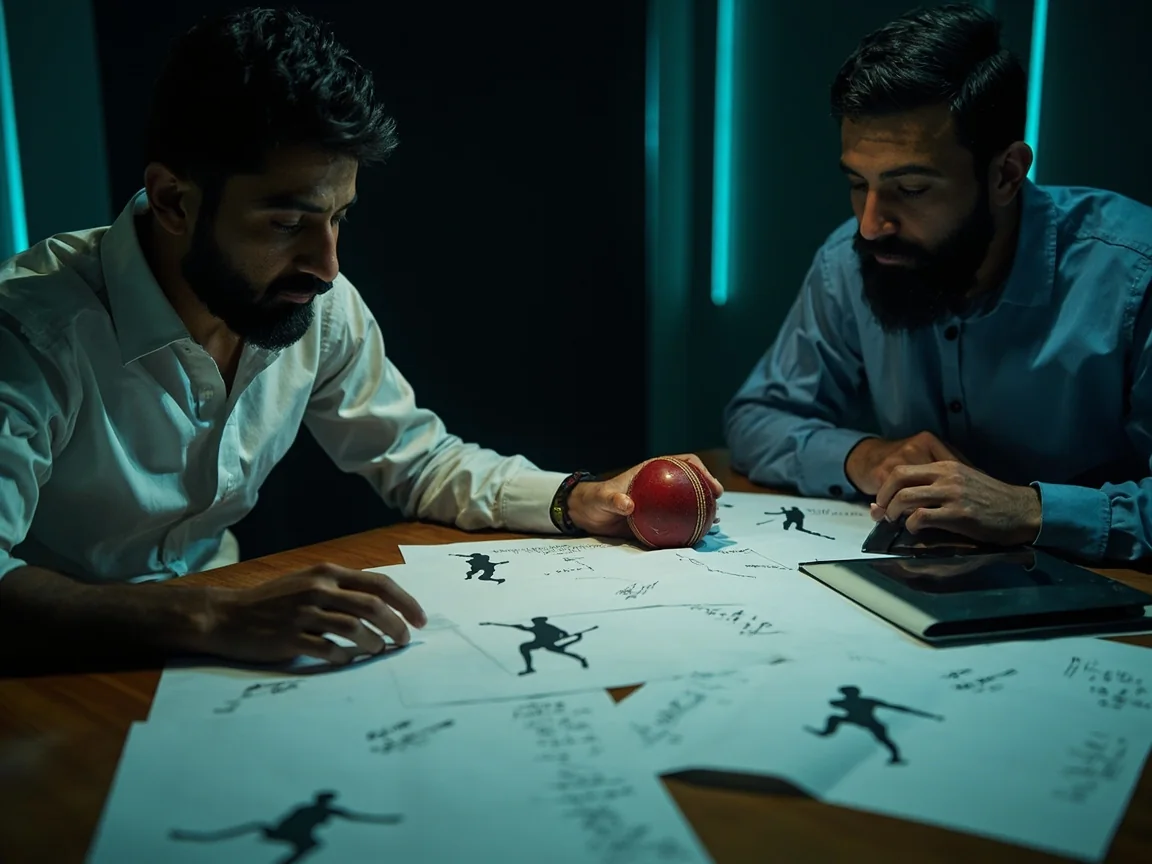
Editorial desk reviewing printed player silhouettes for a probable-XI workflow

Five reading passes before the lock.

The probable-XI workflow is rarely about who is most famous. It is about who can survive the specific conditions of the next 6-8 hours.

1

Confirm the venue

Surface, dimensions, dew forecast and historical behaviour.

2

Read the squad list

Foreign-player slots, impact player, and likely XI.

3

Cross-check head-to-head

How this matchup has actually behaved at this venue.

4

Settle the captaincy pair

Captain + vice-captain belong to the top-2 spot of your reasoning.

5

Stress-test before lock

Walk back to the rationale 10 minutes before the deadline.

Captaincy desk

Pick the captain the data supports — not the name the stadium cheers for.

A captain choice is a 2x return on the points that player already produces; picking the wrong captain is the single largest cost of a missed fantasy night.

Analyst comparing two unbranded captaincy cards on a desk

Captaincy is a 2x multiplier, not a name choice.

Pick the captain whose role produces the most fantasy points per ball faced or bowled at this venue. The C and VC together account for a third of your night.

×2Captain multiplier
×2.5VC fallback bonus
68%Users who revisit captain picks pre-lock
1 of 11Roster slot that swings a contest
Scoring cheatsheet

Reference points while the innings is live.

Reference the standard scoring matrix every regular fan learns inside their first month of play.

Action T20 (example) Action T20 (example)
Run +1 Wicket (excl. run-out) +25
Four +4 LBW / Bowled bonus +8
Six +6 Maiden over +4
30 run bonus +4 Catch +8
Half-century +8 3-fer +4
Strike rate ≥ 170 (min 10 b) +6 Economy ≤ 6 (min 2 ov) +6
Duck (batter / wk-batter) -2 Economy ≥ 11 (min 2 ov) -2
Run-out (fielder) +6 / +12 Run-out (batter) -4
Winners methodology

How winners are actually audited — without inventing stories.

Public fantasy winners tables often hide their methodology. Our approach is explicit so the reasoning is reproducible, even when the specific names never are.

Methodology, in plain English

  • Reproducible — anyone can audit each row.
  • Conditional — surface, dew, and role context matter.
  • No anonymous testimonials — methodology over anecdotes.
  • Comparison-friendly — same scoring reference per page.

What we explicitly refuse to publish

  • Invented winner names with photos we cannot verify.
  • Fabricated reviews or endorsements from public figures.
  • Headline payout numbers without a public source.
  • "Guaranteed winning" language of any kind.
Wallet, KYC and safety

Account hygiene that protects the fun.

Wallet, KYC, and account safety are the unglamorous parts of fantasy cricket that decide whether the experience survives across multiple seasons.

Wallet and KYC preparation for fantasy cricket

Wallet and KYC are the parts you finish before the first deposit.

Complete KYC before the first deposit, lock down a unique authenticator, and keep a written limit on file. Withdrawals almost always require the same KYC to succeed.

Responsible play

Read this coverage before any real-money night.

Fantasy cricket can be analysed without ever being played for money. None of the editorial work above requires a deposit.

Eight limits every regular fan already applies.

Before locking a paid contest, place the deposit against a written limit. If you cannot write the limit, you cannot afford the contest.

  • A monthly deposit cap that you can articulate in writing.
  • A weekly session cap that does not extend past a chosen match.
  • A "walk away" rule for any night your line-up changes four times.
  • Eighteen-plus verification — no fantasy account without it.
  • State eligibility — confirm your state allows paid fantasy cricket.
  • KYC completed before the first deposit, not after a withdrawal.
  • One authenticator device, never shared with anyone.
  • A written rule about not chasing losses with bigger contests.
Calm responsible-fan environment for fantasy cricket review
Latest analysis

Recent stories from the desk.

All cricket news →
Frequently asked

Editor answered questions.

Short, plain-English answers drawn from the editorial coverage above.

Is this site the official betwinner platform?

No. betwinner is treated here as an independent editorial subject. This desk is not affiliated with, endorsed by, or licensed by the betwinner brand.

Does this site guarantee any winnings?

No editorial coverage on this site guarantees any contest result, deposit, or payout. Fantasy cricket involves variance and uncertainty that no analysis can remove.

Can I legally play paid fantasy cricket in India?

It depends on your state. Several Indian states permit paid fantasy cricket under specific rules; others restrict it. Verify state eligibility, age, and platform licensing before joining any paid contest.

Where does the editorial coverage sit?

The eight beat pages — IPL, Predictions, Fantasy Tips, Teams, Players, News, Tools, How To Play — cover cricket context. The six brand-intent pages cover the betwinner subject specifically.

How do you keep photographs fresh?

Every photograph is generated independently for this project and is not reused across other editorial projects. Each image carries its own alt, title, and caption.

Where can I find state and compliance notes?

The Responsible Play section at /responsible-play/ collects the editorial position on age, state eligibility, KYC, deposit limits, and self-exclusion.

Open the editorial desk.

Start with the prediction methodology — every other section refers back to it.

Read the methodology New here — start with the handbook
Editor desk deep dive

What a serious follower actually watches on a night match.

A 60-over T20 night produces 240+ decisions that move a fantasy lineup. We track the ones that move most of the points.

Powerplay

Reading the first six overs.

The powerplay tells you where this match is going to settle. A 1.4 wickets-per-over pace bowler is dominant regardless of pace figure; a 1.4 fours-per-over powerplay is differential power. Track the powerplay first, every match.

Middle overs

Overs 7-16 — the differential window.

Most fantasy points swing between overs 7 and 16 because the role mix (1 spinner, 2-3 batters) is highest-variance. A spinner who takes 2 wickets in this window swings 25-35 lineup slots. Read this window as the differential window of any T20.

Death overs

Overs 17-20 — the bowler's window.

Death overs belong to bowlers who land yorkers under pressure. A specialist death bowler produces 1.5x-2x the points of a part-timer. Audit by yorker completion rate — never by raw speed.

Chase

Reading the chase.

A chasing favourite survives only when the dew stays dry. With heavy dew, the chasing favourite flips into the defending favourite. The chase read belongs to the dew tracker — not to the public narrative.

Career-long discipline

Six habits that survive across seasons.

The habits that keep fantasy cricket interest alive across a 70-match league are not about predictions; they are about how you read.

1

Read the venue before any prediction.

Two seasons of venue behaviour outrank any single player's reputation. Read the venue first, the player second.

2

Walk the lineup back 10 minutes before lock.

The four-refresh rule caps indecision at the deadline. Refresh four times maximum, then lock the lineup.

3

Pick 3-5 differentials per lineup.

A lineup without differentials is a copy of the public. A lineup with 8 differentials is indistinguishable from a random lineup. The middle is the desk target.

4

Audit a wrong prediction in public.

Publish every wrong prediction as an after-the-match audit. A public audit is more credible than a perfect record.

5

Read pressers before reading social.

The verification ladder starts with the official presser and ends with the social post. Read in that order every time.

6

Keep a written deposit limit.

A monthly deposit cap written down. If you cannot write it, you cannot afford the contest.

Why this desk publishes

This desk publishes because editorial coverage of the IPL is a discipline with its own rules, and visitors benefit from rules that are stated clearly. The desk treats every claim with the same discipline: where a claim is verifiable, the desk states the verification level; where it is not, the desk says so.

What this desk refuses to publish

The desk refuses to publish invented winner names with photos we cannot verify, fabricated reviews or endorsements, headline payout numbers without a public source, and "guaranteed winning" language of any kind. Each refusal is documented alongside the editorial reason.

How this desk changes

The desk publishes corrections in-place with timestamped notes. Position changes happen when the brand's own terms change, when a regulatory announcement lands, or when a verification gap is filled. The desk does not publish position changes without a verification ladder note.

The eleven rules a regular fan lives by.

An eleven-rule discipline is what keeps a regular fan's interest alive across a 70-match league, across multiple seasons, across new platforms. They are not a moral code; they are an editorial discipline.

Rule 1 — Read the venue before any prediction.

Two seasons of venue behaviour outrank any single player's reputation. Read the venue first, the player second. The venue tells you where this match is going; the player tells you who.

Rule 2 — Walk the lineup back 10 minutes before lock.

Walk back to the rationale 10 minutes before the deadline. The four-refresh rule caps indecision. Refresh four times maximum, then lock the lineup.

Rule 3 — Pick 3-5 differentials per lineup.

A lineup without differentials is a copy of the public. A lineup with 8 differentials is indistinguishable from a random lineup. The middle is the desk target.

Rule 4 — Use the impact-player slot only when independent.

An impact-player substitution is free only when the decision is independent of the rest of the lineup. Use it on a specialist swap, an all-rounder lift, or an anchor swap. Don't use it for cosmetics.

Rule 5 — Audit a wrong prediction in public.

Publish every wrong prediction as an after-the-match audit. A public audit is more credible than a perfect record. The audit is the editorial product.

Rule 6 — Read pressers before reading social.

The verification ladder starts with the official presser and ends with the social post. Read in that order every time. Social posts are the last source, not the first.

Rule 7 — Keep a written deposit limit.

A monthly deposit cap written down before the first deposit. If you cannot write it, you cannot afford the contest.

Rule 8 — Complete KYC before the first deposit.

Complete KYC first. Withdrawals almost always require the same KYC to succeed. KYC-completion before deposit prevents surprises at withdrawal.

Rule 9 — Use an authenticator app, never SMS alone.

SMS-based 2-step is better than nothing, but it is vulnerable to SIM-swap. Use an authenticator app or, where supported, a physical security key.

Rule 10 — Treat 18+ as non-negotiable.

Eighteen-plus is non-negotiable. The desk never recommends a contest below 18. State-by-state eligibility must be verified before any deposit.

Rule 11 — Read your platform's self-exclusion path.

Read the platform's self-exclusion path before joining a contest. The path is your break-glass option — present, documented, and tested in advance.


Common mistakes the desk sees across the IPL beat.

Mistake A — Skipping the venue read.

Reading a fixture without a venue read is reading a match as if all venues are the same. They are not. Subcontinental black soil and red soil produce different bowling plans at different overs. Always read the venue first.

Mistake B — Trusting the headline bonus number.

The headline bonus number is rarely the final number. A bonus with 10x rollover returns roughly half its face value to the visitor. Compare offers on the post-rollover value, not the headline.

Mistake C — Skipping KYC until the first withdrawal.

Skipping KYC until the first withdrawal creates a verification gap at the worst time. Complete KYC before the first deposit, not after the first withdrawal.

Mistake D — Side-loading an APK on Android.

Side-loading an APK bypasses the platform's signature verification. The desk recommends official app store installs only — every time.

Mistake E — Following a login link from an SMS, email, or social DM.

A login link from an SMS, email, or social DM is rarely the official channel. Bookmark the URL by typing it manually. Search-engine results can lead to lookalike sites.

Mistake F — Reusing the password across platforms.

A reused password compounds a breach. Use a unique password per platform — never reuse, never share.

Mistake G — Indecision at the lineup deadline.

The four-refresh rule caps indecision at the deadline. Refresh the lineup at most four times in the last 30 minutes. Lock the lineup once.

Mistake H — Treating pressers as marketing copy.

A presser usually leaks 2-3 lineup signals if read carefully — a player's workload ceiling, a role change in the batting order, or an overseas-player preference. Read the presser before reading the social feed.

Mistake I — Treating dew as noise.

Dew is the single largest second-innings variable in the IPL. A heavy dew reduces grip by 8-12% in the second innings and can flip a chasing favourite into a defending favourite.

Mistake J — Picking a captain by name recognition.

The captain doubles the points that player already produces. Pick the captain whose role produces the most points per ball faced or bowled at this venue. The captain is a 2x multiplier, not a name.

Play now