What the Tribunal ruled, in one paragraph
An Appellate Tribunal constituted under the Smugglers and Foreign Exchange Manipulators (Forfeiture of Property) Act, 1976 (SAFEMA), sitting as a quasi-appellate body against Foreign Exchange Management Act (FEMA) orders, has partly allowed the appeals filed by the Board of Control for Cricket in India, former IPL chairman Lalit Modi, the former BCCI president N. Srinivasan, the late office-bearer M. P. Pandove, and the State Bank of India. The two-member bench comprising Chairman Justice Munishwar Nath Bhandari and Member Rajesh Malhotra set aside most of the conclusions of the Enforcement Directorate's adjudication order dated 31 May 2018. The bench retained only two specific counts against the BCCI — both downgraded — and held that the SBI branch and its former Chief Manager, A. K. Nazeer Khan, were not liable for any FEMA breach on the facts before them. The order is the most consequential shake-out of the 2009 IPL case since the ED first framed penalties against the Board.
The Tribunal did not strike the ED's order out in full. It did the harder thing: it pulled most of the order apart by count, and it examined the FEMA framework as the proceedings asked — case by case, transaction by transaction — instead of treating the relocation of the 2009 season as one indivisible event. The result is a partial but substantial reversal. Most of the penalty amount and most of the named individuals are now off the hook. Two reduced counts survive, and the rest of the file moves to compliance.
Read this first: the two numbers the Tribunal did not touch
Why the case existed in the first place

The FEMA case was about how the BCCI moved money to South Africa for the 2009 season, not about the on-field tournament itself.
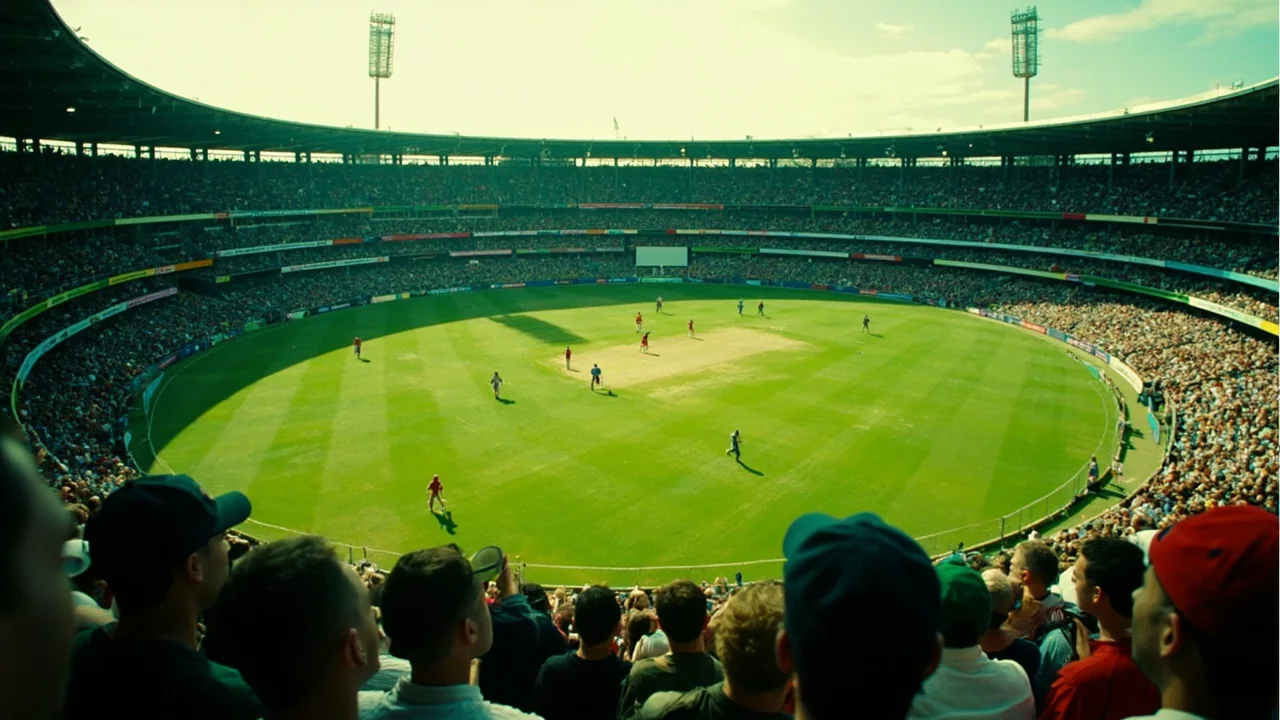
The 2009 Indian Premier League season was, in cricket terms, the DLF IPL II. It was supposed to be the second tournament in the series that had started in 2008, and it was supposed to be played across India from April to May. A general election to the Lok Sabha converged with the IPL's home window, and the Ministry of Home Affairs asked the BCCI to defer the season. The BCCI moved the season — in its entirety — to South Africa. The matches were staged across venues in Johannesburg, Durban, Centurion, Port Elizabeth and Cape Town. The schedule held, the broadcast held, and the Chennai Super Kings beat the Mumbai Indians in the final at the DY Patil Stadium on 25 April 2010 — the final finished outside India because the Indian leg had been packed into the rescheduled window.
Running an international T20 tournament from outside India forced a large number of foreign-exchange transactions: payments for broadcast uplinks, hospitality costs, freight, official travel, hotel holds, ground rentals, ticket settlements and franchise player payments. Some of those transactions were routed through the State Bank of India's overseas-correspondent network; some went through commercial banks; some were settled directly by franchises. The Enforcement Directorate investigated the consolidated inflow and outflow over the period 2009 to 2013 and concluded that a number of the BCCI's remittances fell foul of FEMA — specifically Section 3 (a) read with the Liberalised Remittance Scheme and Section 4 read with Regulation 4 of FEMA Notification 16 — on the grounds that the amounts recorded in the Board's own books did not match what had actually been sent abroad.
On 31 May 2018, the ED's adjudicating authority imposed penalties on the BCCI, Lalit Modi, N. Srinivasan, M. P. Pandove, the State Bank of India and its former Chief Manager A. K. Nazeer Khan. The total value of the penalties on the Board's office-bearers ran into several crores. The appeals that culminated in this week's order had been pending for the better part of eight years.
Blow-by-blow: which findings the Tribunal kept, and which it set aside
Set aside
- The personal penalties on Lalit Modi — the former IPL chairman was the highest-profile individual named in the 2018 order. The Tribunal held that the FEMA framework, as it stood for the period under consideration, did not impute personal liability to him on the transactions the ED had cited. The ED's specific findings on his individual role are set aside.
- The findings against N. Srinivasan — the former BCCI president was a non-official respondent in the ED file. The Tribunal set aside the FEMA findings against him on the same reasoning that led to Modi's relief.
- The findings against M. P. Pandove — the former BCCI office-bearer was cited in the 2018 order. The Tribunal set aside personal findings against him.
- The findings against the State Bank of India and A. K. Nazeer Khan — the bench held that the foreign remittances processed by the SBI branch were carried out in the ordinary course of banking operations and did not, on the facts available, constitute FEMA violations on the bank's part. The Chief Manager, who had handled the documentation at the branch level, is cleared.
Upheld — but reduced
- The BCCI's books-of-accounts mismatch — the Tribunal upheld the ED's finding that the BCCI remitted an amount abroad that exceeded what was reflected in the Board's own books of accounts. The original penalty of ₹4 crore has been reduced to ₹1 crore on the ground that the funds were eventually repatriated.
- The delayed repatriation of ticket-sale proceeds — the Tribunal agreed that there was a delay in bringing back the proceeds from the tournament's ticket sales to India. While the FEMA violation on this count stands, the bench treated the eventual repatriation as a mitigating factor in the penalty calculation.
Procedural points worth flagging
- The Tribunal was constituted under SAFEMA, not FEMA. SAFEMA gives the Tribunal appellate-cum-adjudicatory jurisdiction over orders passed by the ED on penalty matters; that is why the same bench was competent to hear FEMA-side appeals that piggy-backed on the ED's broader adjudication.
- The order is a "partly allowed" order. It is not a clean acquittal: the ED retains two findings of FEMA breach against the BCCI itself.
- Lalit Modi's statement frames the order as vindication. The bench's order speaks to FEMA compliance; it does not adjudicate on the underlying commercial decision to move the tournament to South Africa, which was a regulatory and logistical decision driven by the general-election collision.
Who spoke, and the words they used
Only Lalit Modi issued a public statement on the day of the order. His reading was straight: the Tribunal's conclusions, he said, "reaffirm" the position he had held since the proceedings began. "For over sixteen years," Mr. Modi said, "I have consistently maintained that I acted in good faith, in the best interests of Indian cricket and the IPL, and committed no personal wrongdoing." He underlined that the 2009 relocation was a decision taken under unusual constraints, after the Lok Sabha election timetable made it impossible to hold the tournament in India within the IPL's broadcast window. The other named individuals had not, at the time of writing, released a similar statement.
It is worth reading the statement closely. Mr. Modi is framing the outcome in the language of reputational recovery. The Tribunal's order does not, in itself, carry an endorsement of his conduct in commercial terms — the bench decided what FEMA could and could not impute to him given the transactions that came before it. The two are different findings, and a careful reader will keep them separate.
Why the Tribunal cleared the SBI branch and its Chief Manager

The bench's reasoning on the bank hinges on whether the branch acted in the ordinary course of its banking business, not as a participant in the BCCI's commercial decisions.
The SBI clearance is the more interesting legal point, and it is also the portion of the order with the most general application beyond this case. The bench found that the foreign remittances processed by the SBI branch were carried out in the ordinary course of banking operations. The documentation was carried in line with the bank's standard correspondent-banking workflow; the branch did not participate in the BCCI's commercial or strategic decisions; the Chief Manager processed files in the way he would process any other set of outward remittances from a corporate customer. On those facts, the bench held, an imputation of FEMA liability against the bank or its officer required conduct that went beyond what the ED had actually established.
The reading is narrower than the bank's full defence. The bench did not say that a bank's correspondent role immunises it from FEMA scrutiny across every category of remittance. It said that on the file before it, the bank's documentation and processing were ordinary, and the ED's case against the bank had not crossed the threshold of demonstrating an active participant role. For India's wider banking system — and for treasury officers who routinely process large-ticket outward remittances — the order confirms that processing a transaction is not the same thing as participating in it. The distinction sits at the heart of correspondent-banking risk, and it is the most useful takeaway for any large-customer remittance workflow outside cricket.
What this changes for the IPL's administrative record
The 2009 South Africa case has shadowed the BCCI's administration for the better part of two decades. The Tribunal's order does not erase the shadow — two FEMA findings sit with the Board itself — but it does cut it down. Here is what changes in practice.
For the BCCI's institutional record
The Board continues to carry a single FEMA violation count for the books-of-accounts mismatch, at a reduced penalty, and a single count for the ticket-proceeds delay. The personal findings against named office-bearers — including the most senior figures from the 2009 season — are now off the books. For any future FEMA clearance, audit, or licence renewal, the live file is materially smaller than it was on Monday of this week.
For Lalit Modi personally
Mr. Modi's FEMA exposure on this file is ended. Other proceedings linked to the 2009 tournament — at the BCCI disciplinary level, and in commercial arbitration — remain live separately and are not affected by this order.
For the SBI branch and A. K. Nazeer Khan
Both are fully cleared on this file. The Chief Manager's retirement, in any event, has not been affected; the order removes a long-pending FEMA cloud that had followed him past his service tenure.
The procedural clock that is still running
The Tribunal's order is final on the FEMA counts that fell within the appeals filed. Two procedural questions are still in the system, and they will determine what happens next.
Compliance with the reduced penalty
The BCCI will now have to comply with the ₹1 crore residual penalty within the time-frame that the order sets. Compliance reporting is filed through the Directorate of Enforcement's adjudicating authority, not through the Tribunal itself.
Whether the Department of Revenue takes the further appeal
Either side — the ED on the parts where its findings were set aside, or the appellants on the parts where findings survived — could in theory approach a higher appellate forum. The text of the order suggests that the points on which the Tribunal took a clean view are unlikely to be revisited, but until any further appeal window is formally closed, the file does not close.
Editor-answered questions on the SAFEMA Tribunal ruling
Did the Tribunal acquit the BCCI and Lalit Modi of all FEMA charges?
No. The Tribunal set aside most of the 2018 ED order, but two findings against the BCCI itself remain. The first is a books-of-accounts mismatch, now reduced to a ₹1 crore penalty. The second is a delay in repatriating ticket proceeds. Lalit Modi's personal findings were set aside.
Why was a SAFEMA Tribunal hearing a FEMA case?
The Tribunal was constituted under the Smugglers and Foreign Exchange Manipulators (Forfeiture of Property) Act, and its appellate-cum-adjudicatory jurisdiction extends to FEMA orders passed by the ED. That is why the same bench could hear appeals that piggy-backed on the ED's broader FEMA adjudication.
Who else was cleared in the order?
Alongside Lalit Modi, the Tribunal set aside FEMA findings against N. Srinivasan and M. P. Pandove. It also cleared the State Bank of India branch and its former Chief Manager, A. K. Nazeer Khan.
Why does the books-of-accounts finding survive?
The Tribunal found that the BCCI's outward remittances for the season exceeded the amounts reflected in its own audited books. The fact that the funds were eventually repatriated was treated as a mitigating factor and reduced the penalty from ₹4 crore to ₹1 crore, but the FEMA breach on this count stands.
Does this affect the BCCI's ability to organise future IPL editions?
The ruling is narrow to the FEMA file connected with the 2009 South Africa season. It does not change the BCCI's standing to organise, sanction or run the IPL in any subsequent year. Cricket-administration matters sit separately from FEMA exposure.
Does this change anything for fantasy cricket players?
No, the order is administrative and procedural. It does not move the on-field calendar, the points system, or the squad-eligibility rules used by fantasy platforms. The IPL coverage desk, however, treats institutional clarity — including a smaller FEMA cloud on the Board — as a positive signal for tournament stability.
What to watch next on the IPL beat
- Whether the BCCI files the compliance report on the reduced ₹1 crore penalty within the deadline the order specifies.
- Whether the Department of Revenue or any of the appellants move a higher forum against the parts of the order that went against them.
- Whether any of the other concurrent proceedings linked to the 2009 season — disciplinary, commercial or arbitral — move into a public phase in the coming weeks.
- How the IPL's calendar for the next window absorbs the administrative reset. The cricket-side rhythm does not change, but governance headlines sometimes bleed into franchise-side uncertainty, and the desk will track that.
For the wider IPL beat, this is a story about administrative cleanup, not cricket. The points system, the squad rules, the captaincy desk, the match-intelligence layer — none of it moves on the back of a FEMA order. What does move is the BCCI's institutional record as it enters the next broadcast cycle, and that is the part worth watching through the rest of the summer. [Return to IPL coverage for the live desk.]
Source attribution
Reporting on this ruling is based on Sportstar's coverage of the SAFEMA Appellate Tribunal order of 21 July 2026 (datePublished 22:38 IST, dateModified 23:08 IST) under the headline "IPL 2009 South Africa case: SAFEMA Tribunal sets aside most ED findings against BCCI, Lalit Modi." Lalit Modi's quoted statement is reproduced from that report.