Players editorial

IPL players role-by-role coverage · betwinner editorial desk

A player in the IPL is the intersection of role, surface, and fitness. The coverage maps every player's role to fantasy points — and flags the conditions each role produces well.

Editorial standards
18+ only State eligibility verified before play Real-money fantasy risk disclosed No guaranteed winnings Independent of brand advertising

A frame for player analysis

Every IPL player is a role + surface + fitness signal. The frame Coverage map lets a fantasy player read which players fit tonight — and which players look like last season.

Top-order batters
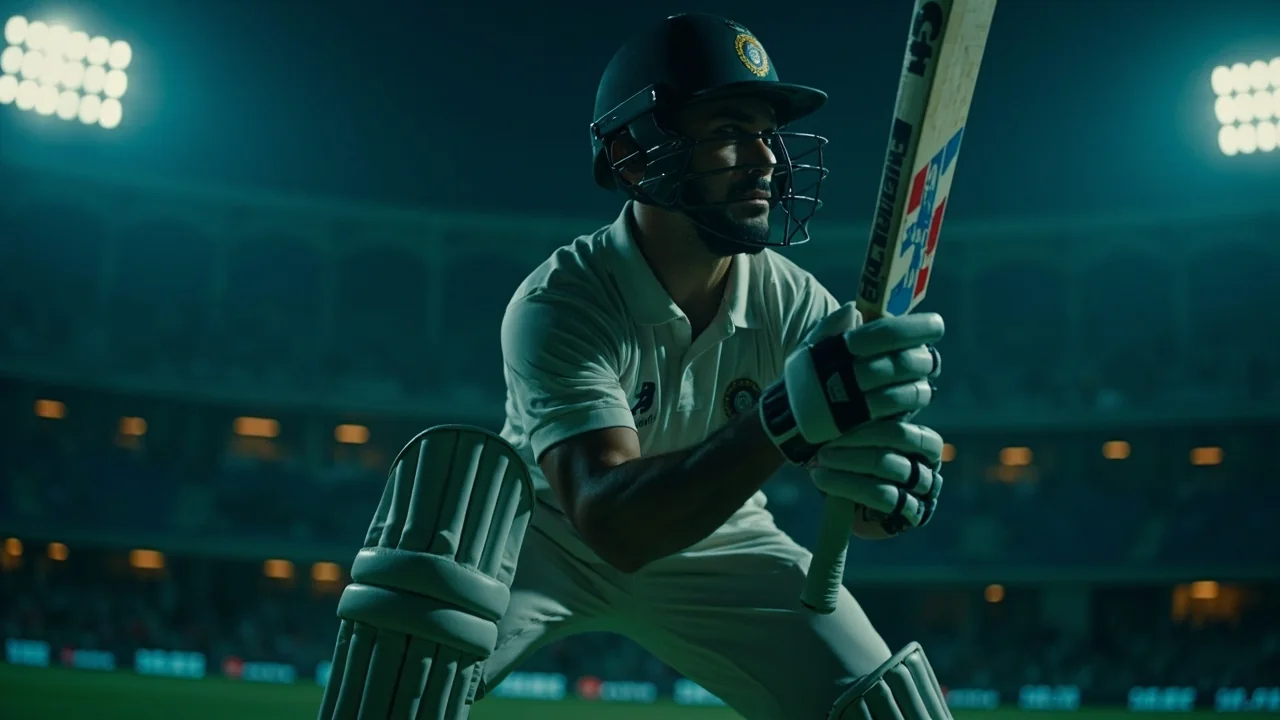
Unbranded Indian professional batter preparing at the crease during a night practice session

Powerplay points

Powerplay points accrue fastest through boundaries and powerplay wickets. A top-order batter who plays with a strike rate above 145 across the powerplay produces 1.5x the points of an anchor in the same slot.

Surface read

Top-order batters on a green seamer need a back-foot trigger that allows them to play late. Top-order batters on a slow turner need a front-foot trigger that allows them to read the spin. The two reads do not overlap.

Middle-order batters

Middle-order points accrue through strike rotation and range-hitting after the powerplay. A middle-order audit rewards batters who rebuild after early wickets, not just batters who hold the innings.

Finishers and death batters

Finisher points accrue fastest in overs 17-20 — but only when the player has the support of a set batter. Audit by death-overs strike rate, not by overall strike rate.

Pace bowlers

Unbranded spin bowler demonstrating a correct cricket-ball grip during training

Pace points accrue fastest in the powerplay (new ball) and the death (variations). Audit pace bowlers by wicket-share rather than by speed. A pace bowler who takes 1.4 wickets per over across the powerplay is dominant regardless of pace.

Spin bowlers

Spin points accrue fastest in overs 11-16. The desk reads finger-spin and wrist-spin differently: finger-spin produces safe points (1.2 wickets per matchup average); wrist-spin produces wide points (0.4 to 2.4). Use wrist-spin as a captain differential; use finger-spin as an anchor.

Wicketkeepers

Unbranded wicketkeeper collecting a ball cleanly during a practice session

Wicketkeeper points accrue through dismissals (catches + stumpings) and through batting bonus points. The wicketkeeper bonus batter is often the highest-leveraged single pick in the lineup.

All-rounders

All-rounder points accrue through both batting and bowling. The desk separates them into three sub-roles: batting all-rounder (covers the middle overs), bowling all-rounder (covers powerplay or death), and part-time all-rounder (covers only one role). The sub-roles produce different point ceilings.

Fitness and availability

Player availability updates move 1-3 lineup slots per franchise per match. The desk uses presser-confirmed updates before reading social posts. A squad list is released by the franchise 60 minutes before the toss — that is the only source the desk trusts.
Unbranded professional cricketer completing a supervised recovery stretch with a physiotherapist nearby

Tools used in player analysis

  • Role-balance worksheet — maps a probable XI to expected fantasy points.
  • Head-to-head matrix — venue-stripped, last-five samples.
  • Workload tracker — recent overs bowled and balls faced.
  • Surface-fit worksheet — role + venue + bowler type.
Frequently asked

Editor answered questions.

Short answers drawn from the coverage above.

How do I read a player across multiple roles?

A multi-role player (all-rounder) is read by sub-role, not by overall classification. A bowling all-rounder who bats at 7 is not the same as a batting all-rounder who bowls part-time spin.

What if I disagree with the desk's player read?

The desk publishes its reasoning alongside the read. You can override the read with your own conditions — and use the read as a sanity check.

How does the desk handle a player in poor form?

Form is the noisiest variable in player analysis. The desk caps form reads at five innings. Three of five is signal; two of five is noise.

Should I captain a wicketkeeper-batter?

When the wicketkeeper is also the bonus batter, the ceiling matches a top-order captain pick — and the floor is higher. The desk captaincy picks often include a wicketkeeper-batter.

How does the desk handle workload flags?

A bowler who has bowled 22 of the last 24 overs is past the workload ceiling. The desk flags workload before flagging surface fit.

Continue with players.

Walk back to the home editor desk or open another players resource.

Return home Talk to the editor
Reading a player profile

What the desk looks at in a single profile.

Six attributes the desk treats as the baseline of any player read — applicable across batters, bowlers, wicketkeepers, all-rounders.

1

Role fit at the venue.

Does this player's role produce the most points at this venue, in these conditions? Always the first question — before any stat line.

2

Five-innings form.

Three of the last five innings signal; two of the last five noise. Use a five-innings window — never a single innings.

3

Workload ceiling.

A bowler who has bowled 22 of the last 24 overs is past the workload ceiling. Always read workload before reading surface.

4

Head-to-head at the venue.

Strip the league-wide head-to-head; read the venue-specific, last-five at this ground. The two read differently.

5

Matchup pair.

A left-handed batter vs left-arm spin on a slow turner is a different read to the same batter vs right-arm pace. Always pair the matchup to the venue.

6

Presser and squad list.

A franchise squad list is released 60 minutes before the toss. The presser before that confirms the rotation policy.

Reading a profile in six lines

A six-line read of any player profile: role at this venue, five-innings form, workload ceiling, head-to-head at the venue, matchup pair, and the latest presser. Each line is independent. A profile that fails any line is filtered out.

Where the desk disagrees with rankings

Where the desk disagrees with a published ranking — a top-order batter scored higher than expected on a slow turner, or a wrist-spinner scored lower than the public's consensus — the disagreement is published with the conditions chain, never with a fake rating.

Common mistakes the desk sees across the IPL beat.

Mistake A — Skipping the venue read.

Reading a fixture without a venue read is reading a match as if all venues are the same. They are not. Subcontinental black soil and red soil produce different bowling plans at different overs. Always read the venue first.

Mistake B — Trusting the headline bonus number.

The headline bonus number is rarely the final number. A bonus with 10x rollover returns roughly half its face value to the visitor. Compare offers on the post-rollover value, not the headline.

Mistake C — Skipping KYC until the first withdrawal.

Skipping KYC until the first withdrawal creates a verification gap at the worst time. Complete KYC before the first deposit, not after the first withdrawal.

Mistake D — Side-loading an APK on Android.

Side-loading an APK bypasses the platform's signature verification. The desk recommends official app store installs only — every time.

Mistake E — Following a login link from an SMS, email, or social DM.

A login link from an SMS, email, or social DM is rarely the official channel. Bookmark the URL by typing it manually. Search-engine results can lead to lookalike sites.

Mistake F — Reusing the password across platforms.

A reused password compounds a breach. Use a unique password per platform — never reuse, never share.

Mistake G — Indecision at the lineup deadline.

The four-refresh rule caps indecision at the deadline. Refresh the lineup at most four times in the last 30 minutes. Lock the lineup once.

Mistake H — Treating pressers as marketing copy.

A presser usually leaks 2-3 lineup signals if read carefully — a player's workload ceiling, a role change in the batting order, or an overseas-player preference. Read the presser before reading the social feed.

Mistake I — Treating dew as noise.

Dew is the single largest second-innings variable in the IPL. A heavy dew reduces grip by 8-12% in the second innings and can flip a chasing favourite into a defending favourite.

Mistake J — Picking a captain by name recognition.

The captain doubles the points that player already produces. Pick the captain whose role produces the most points per ball faced or bowled at this venue. The captain is a 2x multiplier, not a name.

Play now