Teams editorial

IPL teams intelligence — squads, bowling units, batting depth · betwinner desk

A team in the IPL is a system: top-order batting, middle-order anchoring, all-rounder axis, pace battery, wrist-spin finisher, and the bench. The coverage reads franchises across that system.

Editorial standards
18+ only State eligibility verified before play Real-money fantasy risk disclosed No guaranteed winnings Independent of brand advertising

Editorial frame

A team audit begins with the system, not the names. The desk reads every franchise as six role groups — top-order, middle-order, all-rounder, pace, spin, bench — and asks one question: which role group fails tonight's conditions?

Batting depth

Unbranded batters rotating through cricket nets during a practice session

Top-order

The top-order reads three signals: consistency (last 5 innings), surface-fit (does the opener play spin or pace better?), and intent (powerplay strike rate). A top-order audit always names the differential pick.

Middle-order

The middle-order reads strike rotation and range-hitting under pressure. A middle-order audit rewards players who rebuild after early wickets, not just boundary hitters.

Bowling combinations

A bowling unit is a four-role investment: powerplay seamer, middle-overs specialist, death specialist, plus one of wrist-spin or finger-spin as the matchup choice.
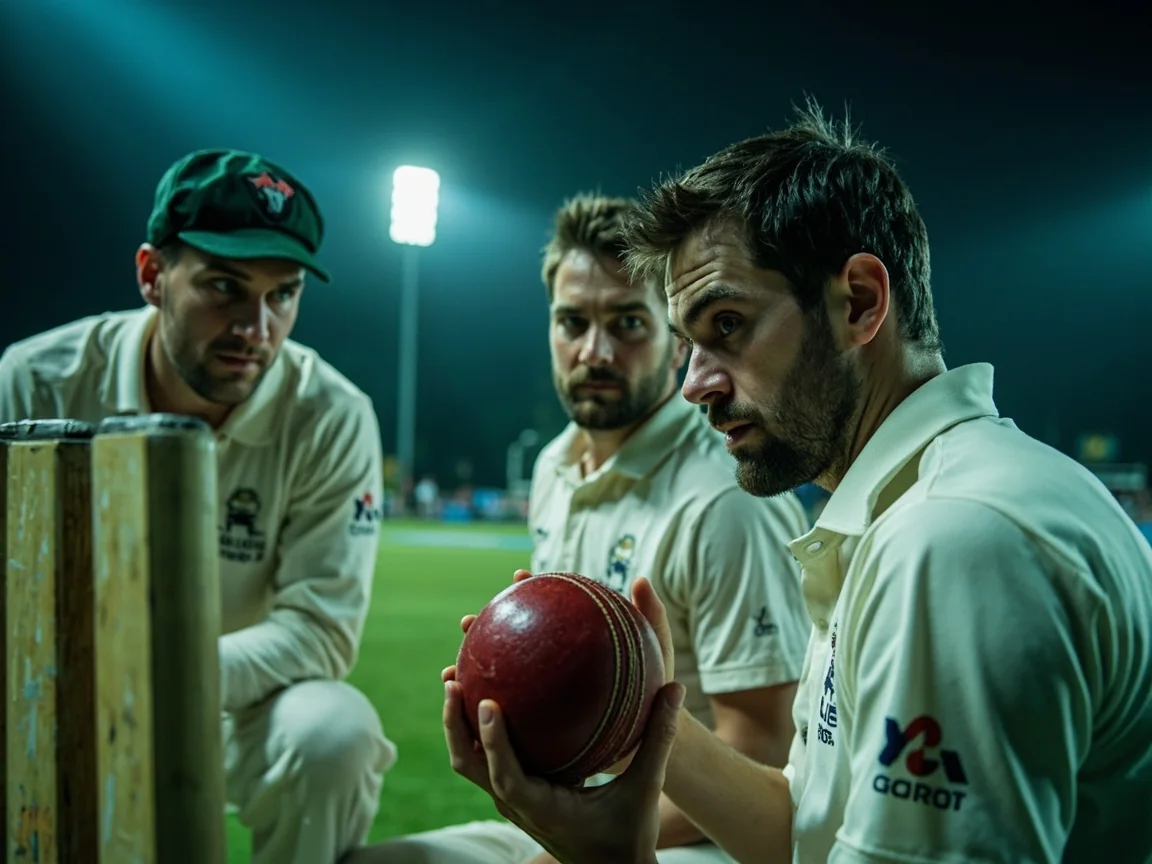
Three unbranded bowlers discussing grip and field plan beside practice stumps

Powerplay unit

A powerplay unit usually pairs a new-ball seamer with a hard-length specialist. Audit by wicket-share, not by speed: a powerplay unit that takes 1.4 wickets per over is dominant.

Death unit

Most franchises carry two death specialists and rotate by surface. Audit by economy under pressure and yorker completion rate.

All-rounder axis

The all-rounder axis is the most leveraged role in modern IPL. A bowling all-rounder who can bat at 7 turns a 1.5x role into a 2x role across most surfaces. The axis reads three signals: workload (recent overs bowled), batting contribution (boundary-share at 7 or below), and role fit (does the franchise bowl the all-rounder in the powerplay?).

Squad rotation
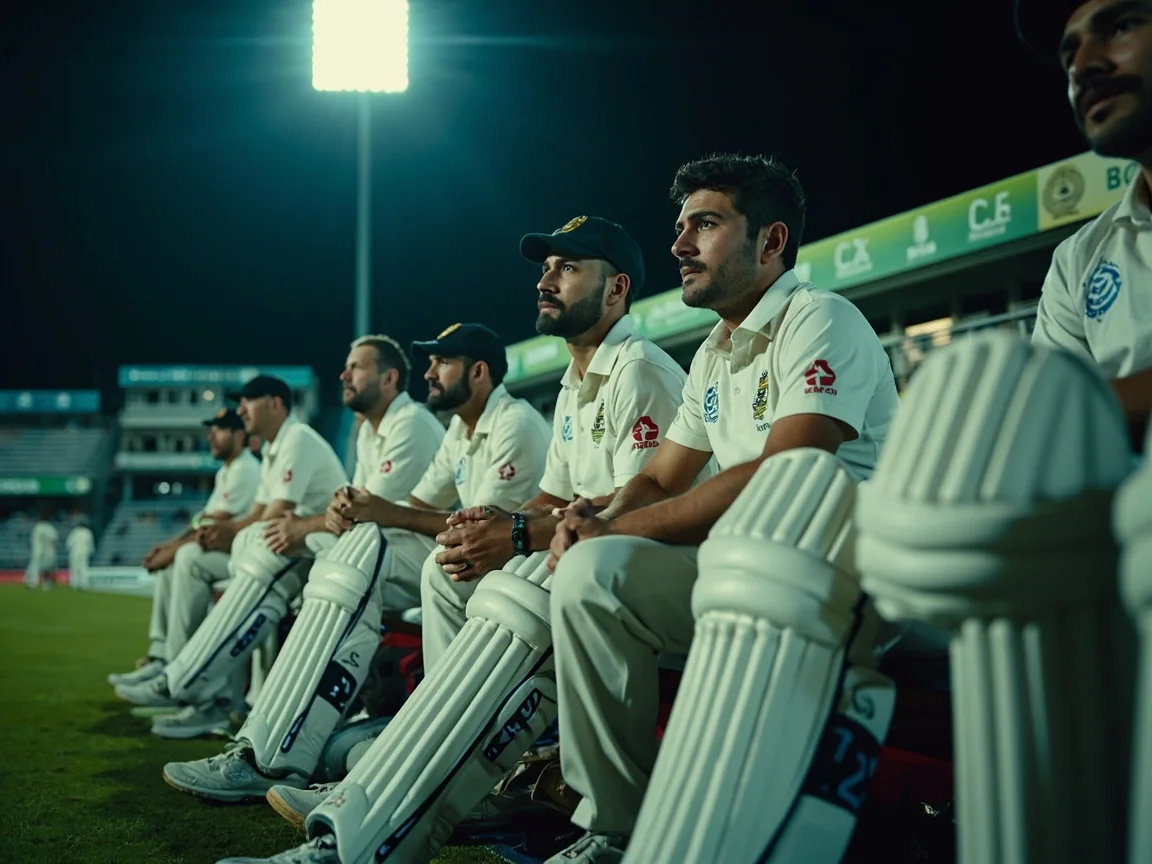
Reserve cricketers and coaching staff watching play from a stadium dugout

A franchise rotates its squad based on three windows: surface, format, and player workload. The desk reads the workload window before reading the surface window — a player who has bowled 22 of the last 24 overs is past his workload ceiling.

Form and momentum

Form is the noisest variable in a team audit. Three of the last five innings are signal; two of the last five are noise. The desk caps form reads at five innings and never uses a single innings as a directional signal.

Matchup analysis

Matchups in the IPL are conditional, not constant. A batter-vs-bowler rivalry that holds at Chepauk rarely holds at Wankhede. The desk publishes matchup analysis only after pairing the rivalry with the venue.

Head-to-head records

  • Venue-stripped head-to-head matters; league-wide head-to-head does not.
  • Last 5 at this venue is the desk's preferred head-to-head window.
  • Head-to-head numbers without venue context are a marketing tool, not editorial coverage.

Impact-player scenarios

The impact-player rule is a free roster decision if used correctly. The desk reads three scenarios: (1) Specialist swap — replace one specialist for another depending on surface. (2) All-rounder lift — promote an all-rounder from the bench to the XI on spin surfaces. (3) Anchor swap — replace the anchor with an extra bowler on pace tracks.

Team-by-team audit checklist

1

Role stability

Has any role group been unstable in the last 3 matches?

2

Workload flags

Any player at the workload ceiling?

3

Surface fit

Does tonight's surface favour the established role mix?

4

Head-to-head

Last 5 at this venue — has the franchise lost here recently?

5

Squad news

Any presser-confirmed changes in the last 24 hours?

Frequently asked

Editor answered questions.

Short answers drawn from the coverage above.

How does the desk decide what counts as a "differential" franchise pick?

A differential is a player outside the public's consensus that the desk's conditions chain supports. The floor is one differential per lineup.

How often does the desk publish per-team notes?

Per-team notes publish whenever the franchise releases a presser, an injury update, or a workload change. They are not republished on a fixed schedule.

What if the head-to-head contradicts the conditions?

Head-to-head is one of several conditions. When it contradicts, the desk usually trusts the surface variable. Head-to-head at the venue usually rhymes with the conditions; head-to-head league-wide usually does not.

Where does the bench sit in this coverage?

Bench and substitution logic lives in the Fantasy Tips page. The Teams page focuses on the playing XI as a system.

How do you handle impact-player decisions?

The desk reads three impact-player scenarios (specialist swap, all-rounder lift, anchor swap). The decision is published alongside the probable XI.

Continue with teams.

Walk back to the home editor desk or open another teams resource.

Return home Talk to the editor
Six franchise profiles

How the desk reads a top, middle, and bottom of the IPL table.

The framework the desk uses to read three franchise profiles — without naming any specific brand.

Top-of-table franchise

Three-pronged pace + wrist-spin finisher.

A top-of-table franchise usually wins with depth, not star power. Look for three-pronged pace variety plus a wrist-spin finisher who can take wickets in overs 11-16.

Middle-of-table franchise

Two good overs, two weak overs per innings.

A middle-of-table franchise usually wins 1-2 innings per match. Their bowling has two good overs and two weak overs; their batting relies on a single top-order batter.

Bottom-of-table franchise

Workload ceiling on every bowler.

A bottom-of-table franchise usually has a workload ceiling on every bowler — death-overs economy breaches 10, powerplay wickets are a coin-flip. Differential picks mostly come from the batting.

All-rounder-led side

Five bowling options across the innings.

An all-rounder-led side can run five bowling options across the innings. Their fantasy ceiling lives in the all-rounder; their floor lives in the top-order.

Spin-led side

Finger-spin baseline, wrist-spin differential.

A spin-led side usually wins on slow turners. Finger-spin is the baseline; wrist-spin is the differential.

Pace-led side

Hard length and short-pitched variety.

A pace-led side usually wins on red soil and short boundaries. Variety between hard-length and short-pitched plans is the differential.

How the desk reads a franchise

The desk reads a franchise as a system of six role groups: top-order batting, middle-order anchoring, all-rounder axis, pace battery, wrist-spin finisher, and bench. Each role group reads independently. A franchise that fails any role group is filtered out of the prediction.

How the desk reads an impact-player decision

An impact-player decision is a free roster decision if used correctly. Three scenarios the desk reads: specialist swap (one specialist for another depending on surface), all-rounder lift (promote from bench on spin surfaces), anchor swap (extra bowler on pace tracks). The decision sits in the probable XI.

Common mistakes the desk sees across the IPL beat.

Mistake A — Skipping the venue read.

Reading a fixture without a venue read is reading a match as if all venues are the same. They are not. Subcontinental black soil and red soil produce different bowling plans at different overs. Always read the venue first.

Mistake B — Trusting the headline bonus number.

The headline bonus number is rarely the final number. A bonus with 10x rollover returns roughly half its face value to the visitor. Compare offers on the post-rollover value, not the headline.

Mistake C — Skipping KYC until the first withdrawal.

Skipping KYC until the first withdrawal creates a verification gap at the worst time. Complete KYC before the first deposit, not after the first withdrawal.

Mistake D — Side-loading an APK on Android.

Side-loading an APK bypasses the platform's signature verification. The desk recommends official app store installs only — every time.

Mistake E — Following a login link from an SMS, email, or social DM.

A login link from an SMS, email, or social DM is rarely the official channel. Bookmark the URL by typing it manually. Search-engine results can lead to lookalike sites.

Mistake F — Reusing the password across platforms.

A reused password compounds a breach. Use a unique password per platform — never reuse, never share.

Mistake G — Indecision at the lineup deadline.

The four-refresh rule caps indecision at the deadline. Refresh the lineup at most four times in the last 30 minutes. Lock the lineup once.

Mistake H — Treating pressers as marketing copy.

A presser usually leaks 2-3 lineup signals if read carefully — a player's workload ceiling, a role change in the batting order, or an overseas-player preference. Read the presser before reading the social feed.

Mistake I — Treating dew as noise.

Dew is the single largest second-innings variable in the IPL. A heavy dew reduces grip by 8-12% in the second innings and can flip a chasing favourite into a defending favourite.

Mistake J — Picking a captain by name recognition.

The captain doubles the points that player already produces. Pick the captain whose role produces the most points per ball faced or bowled at this venue. The captain is a 2x multiplier, not a name.

Play now