Coverage map
The IPL is a finite calendar with 70 league matches and four playoff fixtures. The coverage is not the fixture list itself — the editor desk keeps that in a separate room so it can be updated without re-writing the analysis. The coverage is the editorial frame for reading those fixtures correctly.
The frame has three layers. The bottom layer is venue behaviour — how the surface, dimensions, and dew behave. The middle layer is squad intelligence — who is available, who is rested, who is on a short turnaround. The top layer is leadership — captaincy decisions, impact-player decisions, and the policy decisions a franchise releases publicly.
Tonight and the week ahead
Look at the venues before the head-to-heads. Most IPL upsets are venue-driven, not narrative-driven.
Venue behaviour

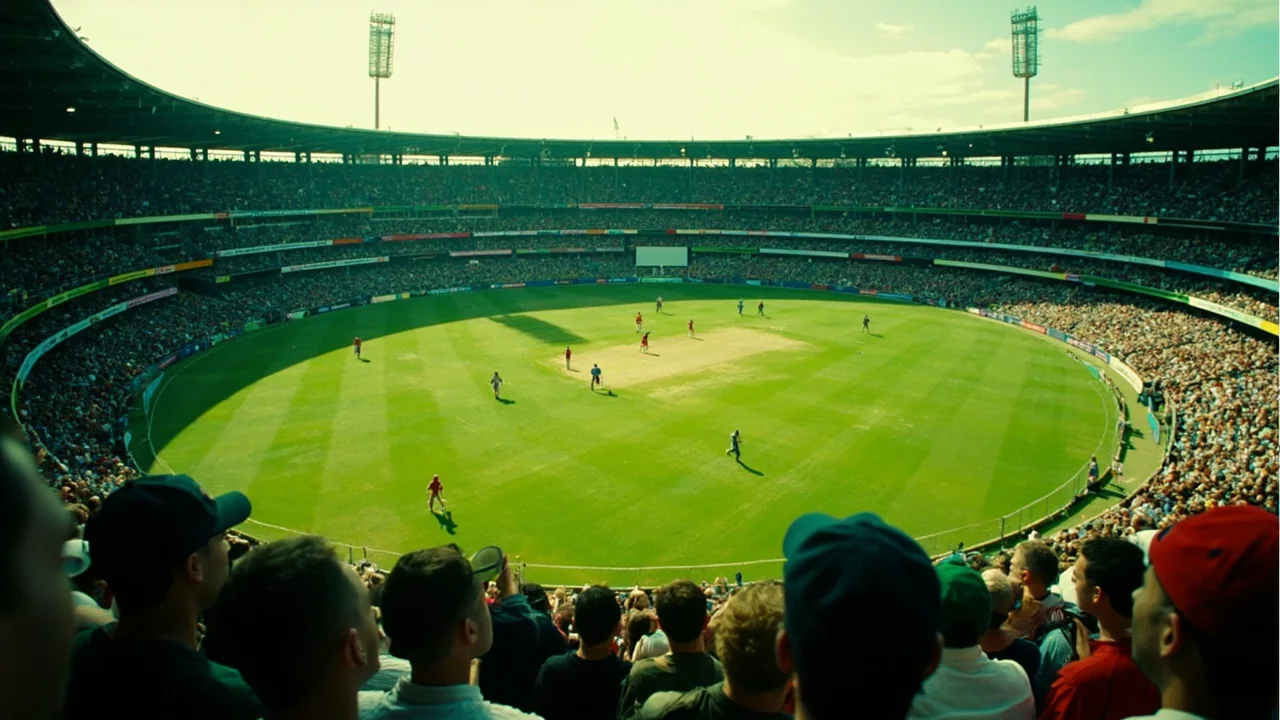
Three things make a venue matter: the pitch surface type (red soil vs black soil), boundary dimensions (long vs short square), and the dew forecast after 19:30 IST. Most surfaces in the IPL are slow turners by design — but they break down differently.
Quick venue read
- Subcontinental black soil holds grip and rewards slower bowlers — expect spinners to peak between overs 11 and 16.
- Drier red soil rewards seam movement early but flattens after the first innings drinks break.
- Short boundaries amplify the value of powerplay wickets — pace bowlers become premium fantasy picks.
- Long square boundaries reward strike-rotation batters over boundary hitters through the middle overs.
- Evening dew reduces grip by 8-12% in the second innings and can flip the contest on its head.
Probable XI flow
Probable XI is the editor-desk skill that prevents a bad fantasy night. We read it as a five-step flow, not a single guess.
Step 1 — Squad and overseas slots
Every franchise has 4 overseas-player slots in the playing XI. The editor desk reads the official team-sheet released by the franchise first — and only second guesses when the franchise has not released one 60 minutes before the toss.
Step 2 — Surface-fit matchups
A pace-heavy surface plus a seam-bowling all-rounder usually beats a spin-heavy XI. The probable XI should always minimise the chance of a role mismatch.
Step 3 — Workload flags
A bowler who bowled four overs the previous night rarely bowls his full allocation on a turnaround. Cross-check squad lists against recent overs.
Team framing
How a team reads the opponent
A team frames the opponent as a set of conditions rather than a set of names. Conditions: who bowls at the death, who holds powerplay wickets, who anchors the middle overs. The frame tells us where the differential points actually live.
The two-bowler policy
Most franchises carry 8 batsmen + 4 bowlers, with one of the bowlers acting as the impact player substitute. The two-bowler policy refers to franchises who commit to a fifth bowling option even at the cost of batting depth.
Captaincy context
Captaincy in the IPL is not a personality contest. Captains are tactical fielders, powerplay decision-makers, and death-over strategists. The fantasy implication is direct: a captain who controls the death almost always produces more 2x points than a captain who only opens the batting.
Pick the captain who controls the highest-leverage moments, not the captain with the most endorsements.
Squad strength by role
Top-order batting
Most IPL franchises invest 6-8 players in their top-7 batting slots. Depth matters because the impact-player rule allows a team to swap one specialist for another depending on surface.
All-rounder axis
The all-rounder role is the most fantasy-leveraged on most surfaces. A bowling all-rounder who can bat at 7 turns a 1.5x role into a 2x role across most nights.
Pace battery
Three-pronged pace with a wrist-spin finisher is the IPL default. Where franchises diverge is in the death-bowling depth — usually two specialists plus a part-timer.
News flow into lineups
Squad announcements, fitness updates, last-minute replacements and impact-player choices. News movement affects anywhere from 1-3 lineup slots per franchise per match. The editor desk reads the verified pressers before reading the social feed.
Tools used on this beat
- Pitch assessment checklist — runs at the start of every venue visit.
- Role-balance worksheet — maps a probable XI to expected fantasy points.
- Captaincy worksheet — assigns a captain pair before any lineup is locked.
- News-to-lineup timeline — translates pressers into probable XI deltas.