News editorial

Verified cricket news desk — IPL coverage without rumours · betwinner editorial

The news desk treats pressers, ground reports, and team announcements as its primary source. Social posts are read second. Each story is checked against at least one non-social source before it appears on this desk.

Editorial standards
18+ only State eligibility verified before play Real-money fantasy risk disclosed No guaranteed winnings Independent of brand advertising

Editorial standards

A cricket news story on this desk must (a) trace back to a presser, an official squad list, a ground report, or a written release from the franchise or the league, (b) avoid claiming a player is fit or unfit without a quoted source, and (c) include the line "verify before relying on this" wherever the source is non-official.

Sources we trust

  • Pressers — captain's pre-match presser, coach's mid-week presser.
  • Official squad lists — released by the franchise 60 minutes before the toss.
  • Ground reports — published by the host venue or the league's media team.
  • Franchise websites — for confirmed player transactions.
  • League-wide releases — for scheduling, format, and policy announcements.

Press conferences

Unbranded cricket coach speaking at a press conference with microphones and journalists

What to read in a captain's presser

A captain's pre-match presser usually leaks 2-3 lineup signals: a player's workload ceiling, a role change in the batting order, or an overseas-player preference. Read those three lines before reading the rest.

What to read in a coach's presser

A coach's presser usually leaks the longer-term signals: rotation patterns, work-rate policy, and any squad-rotation logic that will affect the next 4-6 matches.

Ground reports
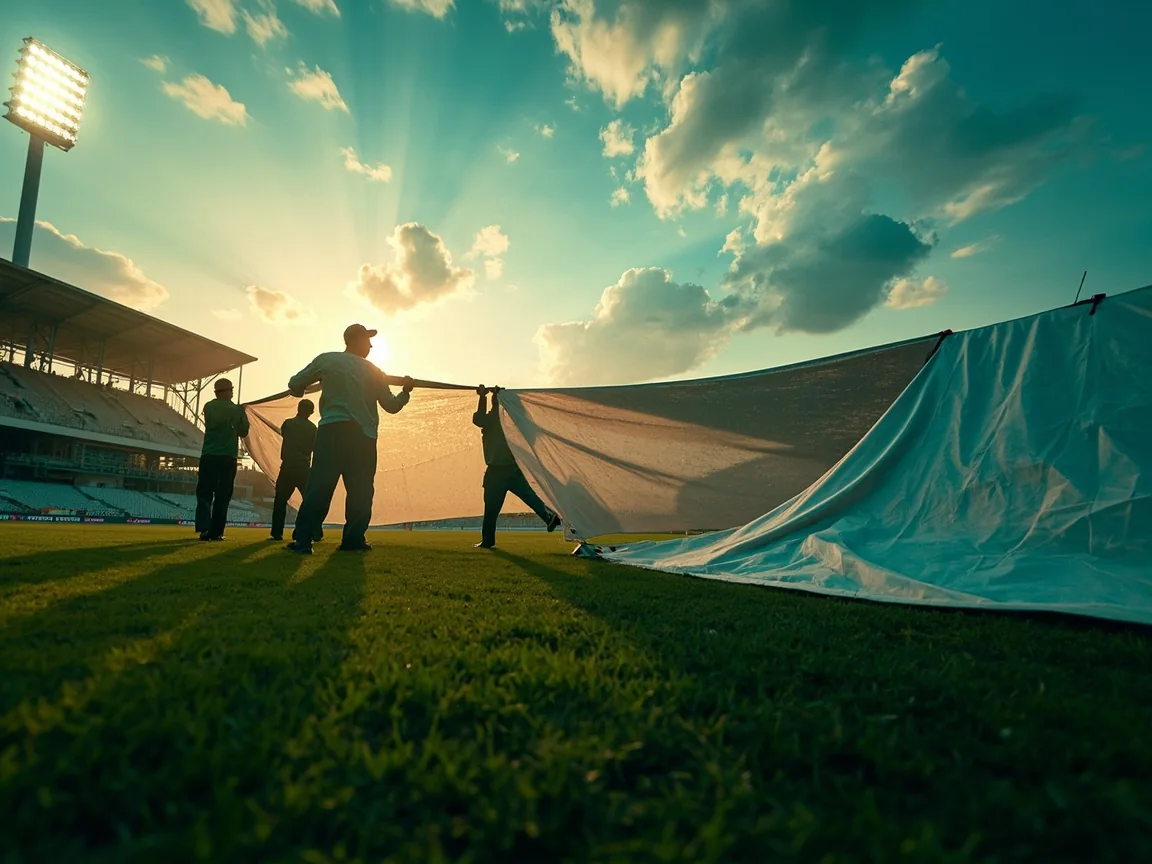
Cricket grounds crew pulling a cover near the pitch under changing evening clouds

A ground report is the only editorial source that confirms surface behaviour before the toss. The desk reads ground reports for grass cover, dry patches, and any change in dimensions since the last match.

Squad announcements

Squad announcements move lineup slots. The desk reads every announcement from the franchise and updates the probable XI within 15 minutes of release.

Cricket reporter taking notes beside the boundary before a match

How a story moves a lineup

Each news story is mapped to the lineup slots it most likely affects. A workload-flag story affects 1-2 bowlers; a presser about a foreign-player slot affects the whole overseas balance. The desk does not amplify stories beyond the lineup effect.

How we verify

Verification ladder

  • Level 1 — presser confirmed, transcript available.
  • Level 2 — non-official source confirmed by another non-official source.
  • Level 3 — non-official source, not yet verified — flagged in the headline.
  • Level 4 — unverified — not published on this desk.

Cadence and timeliness

The desk publishes pre-match stories 4-6 hours before the toss, in-match updates only when a verified source breaks, and post-match audits within 12 hours of the result.

How to follow

  • Visit the home page for the daily editor desk.
  • Open the IPL beat for fixture-specific analysis.
  • Subscribe to the section RSS — listed in the footer index.

Corrections policy

A correction is more credible than a perfect record. The desk publishes every correction in-place on the story within 24 hours of confirmation, with a timestamped note.

Frequently asked

Editor answered questions.

Short answers drawn from the coverage above.

Does the desk publish rumours?

No. The desk publishes rumours only as a flagged "verify before relying on this" line, and only when they reach Level 3 of the verification ladder.

What does the desk do if a presser contradicts a ground report?

Pressers are the higher-trust source for policy. Ground reports are the higher-trust source for surface. The desk writes both reads.

Where does the desk publish post-match audits?

Post-match audits sit at the bottom of the editor desk on the day after the match, then move to the news archive.

How does the desk handle unverified injury news?

Unverified injury news is flagged with the verification ladder level. The desk does not promote unverified injury news to confirmed status without a presser.

Does the desk cover women's cricket?

Not on this edition of the editor desk. The editorial scope is the men's IPL and the men's senior Indian team.

Continue with news.

Walk back to the home editor desk or open another news resource.

Return home Talk to the editor
What the desk writes each day

The editorial rhythm of an IPL week.

A weekly editorial rhythm the desk follows from pre-match Tuesday to the post-match audit on Monday.

TUE

Pre-match desk open.

Tuesday opens the desk on this week's headline matchup. The first story is a frame, not a prediction.

WED

Squad-list coverage.

Wednesday tracks squad lists released mid-week. Notes are added to the team beat and probable-XI flow as the news lands.

THU

Presser coverage.

Thursday's captains presser goes live 30 minutes before the desk publishes a presser-coverage note.

FRI

Pre-lock notes.

Friday publishes pre-lock notes 60 minutes before the lineup lock. Differential picks are flagged with reasoning.

SAT

Match-day desk.

Saturday/Sunday runs the match-day desk. In-match updates are published only on a verified source break.

MON

Post-match audit.

Monday publishes the after-the-match audit. The audit notes what was right, what was wrong, and which condition was the deciding factor.

How news flows into lineups

Each verified news story maps to the lineup slots it most likely affects. A workload-flag story affects 1-2 bowlers. A presser about a foreign-player slot affects the whole overseas balance. An injury story can move 3-5 lineup slots. The desk publishes the lineup effect alongside the story.

Why the desk reads pressers first

The captain's pre-match presser usually leaks 2-3 lineup signals: a player's workload ceiling, a role change in the batting order, or an overseas-player preference. Reading the presser first means reading the highest-trust source of any signal.

Why the desk does not amplify rumours

The desk does not amplify rumours because amplification creates liquidity for the rumour. A Level 3 story (verification ladder) is flagged in the headline — never buried. A Level 4 story is not published on this desk. The discipline protects the editor's reputation.

Common mistakes the desk sees across the IPL beat.

Mistake A — Skipping the venue read.

Reading a fixture without a venue read is reading a match as if all venues are the same. They are not. Subcontinental black soil and red soil produce different bowling plans at different overs. Always read the venue first.

Mistake B — Trusting the headline bonus number.

The headline bonus number is rarely the final number. A bonus with 10x rollover returns roughly half its face value to the visitor. Compare offers on the post-rollover value, not the headline.

Mistake C — Skipping KYC until the first withdrawal.

Skipping KYC until the first withdrawal creates a verification gap at the worst time. Complete KYC before the first deposit, not after the first withdrawal.

Mistake D — Side-loading an APK on Android.

Side-loading an APK bypasses the platform's signature verification. The desk recommends official app store installs only — every time.

Mistake E — Following a login link from an SMS, email, or social DM.

A login link from an SMS, email, or social DM is rarely the official channel. Bookmark the URL by typing it manually. Search-engine results can lead to lookalike sites.

Mistake F — Reusing the password across platforms.

A reused password compounds a breach. Use a unique password per platform — never reuse, never share.

Mistake G — Indecision at the lineup deadline.

The four-refresh rule caps indecision at the deadline. Refresh the lineup at most four times in the last 30 minutes. Lock the lineup once.

Mistake H — Treating pressers as marketing copy.

A presser usually leaks 2-3 lineup signals if read carefully — a player's workload ceiling, a role change in the batting order, or an overseas-player preference. Read the presser before reading the social feed.

Mistake I — Treating dew as noise.

Dew is the single largest second-innings variable in the IPL. A heavy dew reduces grip by 8-12% in the second innings and can flip a chasing favourite into a defending favourite.

Mistake J — Picking a captain by name recognition.

The captain doubles the points that player already produces. Pick the captain whose role produces the most points per ball faced or bowled at this venue. The captain is a 2x multiplier, not a name.

Play now